Year 2 - March 2024
Jukeboxd
- Timeline
- 4 day sprint
- Role
- Design Lead
- Team
- Julian Peter GeronaJan Gabriel ReaJohn Robert SantosCarl Francis AlcantaraLuis Gerard Tiongco
- Stack
- C#ASP.NET Web FormsSQL ServerJavaScript
The Brief
A record store I designed but could never run.
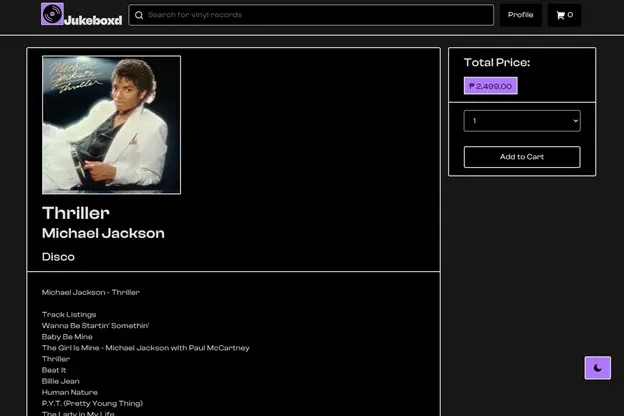
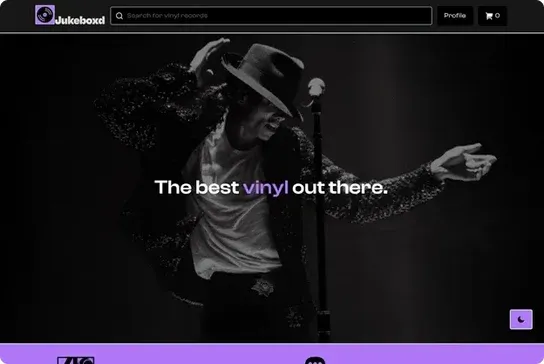
Jukeboxd is a vinyl record e-commerce site built for our second machine problem in IT114L: a storefront where customers browse records, read tracklists, cart, and check out, and an admin dashboard for managing products, orders, and users. The course dictated the stack, C# ASP.NET Web Forms over a SQL Server database. The name is exactly the pun it looks like: Letterboxd, but for records.
Context
Same five people, inverted problem.
Five weeks after Orbit shipped, the same team of five got the opposite assignment. Orbit was pure frontend over a backend we were forbidden to touch; Jukeboxd was full stack in a framework none of us had opened before, .aspx pages, server controls, and a mystore.mdf database holding four tables: accounts, records, cart, and order logs. I pitched the concept and owned the design again, this time a store instead of a social network.
The Constraint
Web Forms does not run on a Mac.
My laptop runs macOS. ASP.NET Web Forms lives on the .NET Framework, which is Windows-only, and Visual Studio for Mac, already scheduled for retirement, never supported it anyway. I could not open the solution, could not start IIS Express, could not once run the application I was designing. The repository’s 89 commits contain zero from my account, and every one of my contributions passed through a teammate’s Windows machine to get in.
Solution
Design in the browser, ship through teammates.
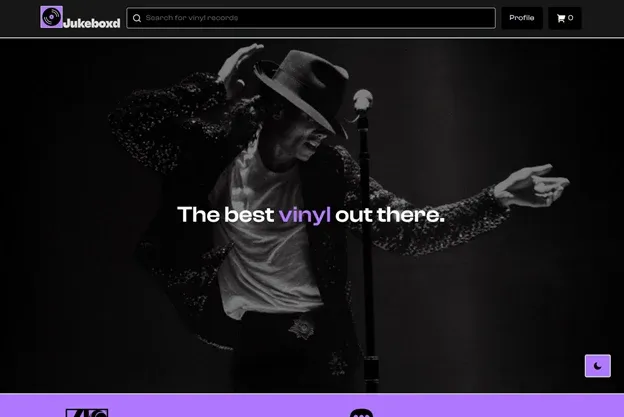
The workaround was to deliver design in the one runtime a Mac does have. I built pages as plain HTML, CSS, and JavaScript prototypes that ran in a browser tab, and teammates converted them into .aspx pages wired to the database. That made communication the actual tool of the project: every page came with the working prototype, and the conversation was about what the converted version had to match.
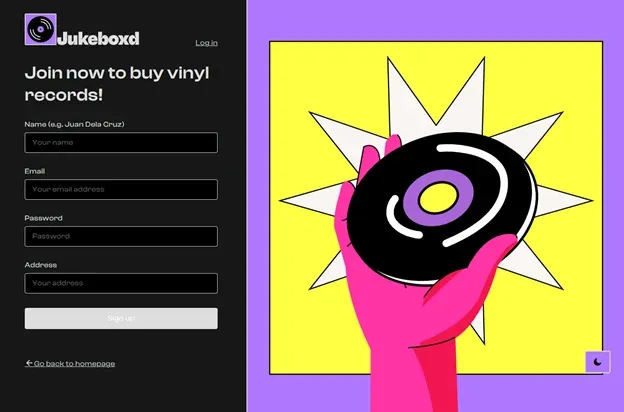
The direction was neubrutalism filtered through Gumroad’s storefront: a warm cream #f9f5f1 background, 2px solid black borders on everything, Clash Display for all type, yellow #ffff42 stickers, and purple #af78fe as the accent. The signature interaction is Gumroad’s button hover, where the element lifts up and left and leaves a hard, unblurred shadow behind:
.btn:not(:disabled):hover {
    box-shadow: 0.25rem 0.25rem 0 var(--filled);
    transform: translate(-0.25rem, -0.25rem);
}
The tokens live as CSS custom properties in one general.css, the same play that kept five people consistent on Orbit, and dark mode is a .dark-mode class that reassigns --background and --filled while the purple accent holds in both themes. A toggle persists the choice to localStorage and swaps the logo SVG to its dark variant.
A Deeper Look
What survives a conversion, and what does not.
The CSS survived the trip intact. Class names carried from prototype to .aspx unchanged, so the borders, the hover shadows, and the theme variables all rendered exactly as designed. The JavaScript mostly did not: Web Forms handles interaction through server postbacks, so client-side logic I had written for cart and form behavior got replaced by C# on the server. The repo still shows the fossil record, customer.js is a file of entirely commented-out code. The one script that survived is theme.js, because dark mode is the one behavior the server has no business handling.
Verification worked the same way in reverse. Since I could not build the project, teammates sent screenshots of converted pages and I checked them against the prototype in my browser, border weights, spacing, hover states, one page at a time.
The Outcome
Shipped in four days. The footer still says Orbit.
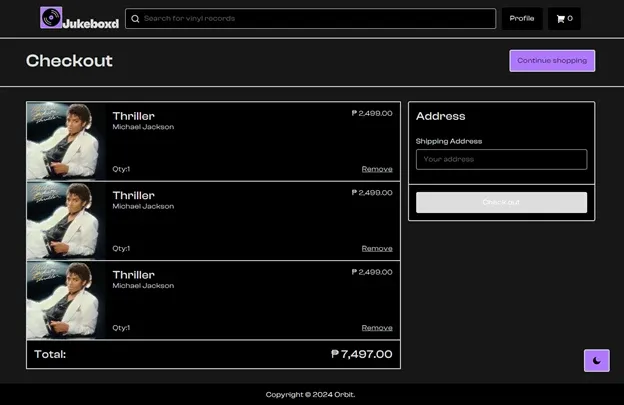
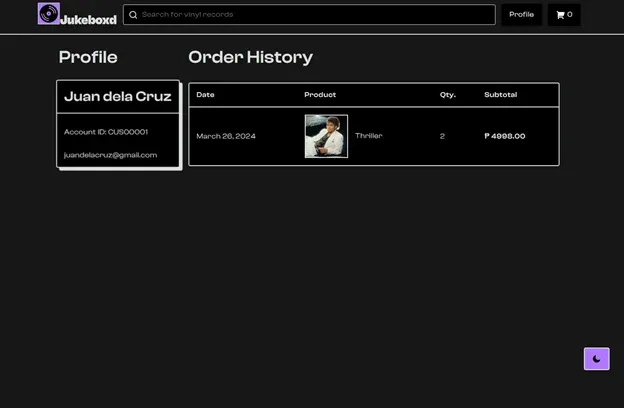
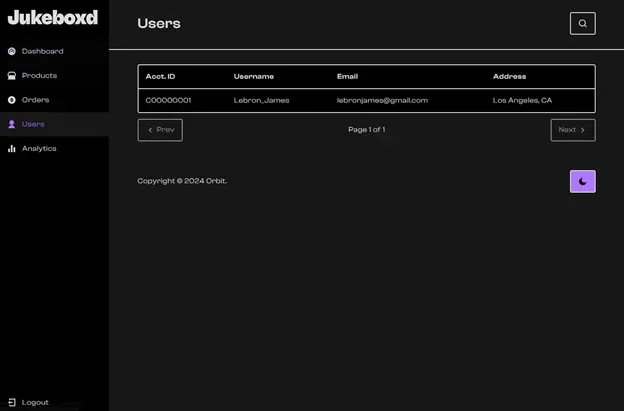
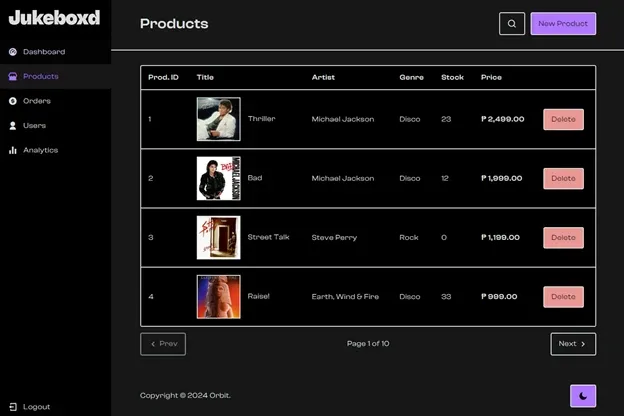
Jukeboxd shipped in 89 commits between March 25 and 28, 2024: search and browse, record pages with full tracklists, cart and checkout with shipping addresses, order history, and an admin panel with product CRUD, order logs, user management, and ten-per-page pagination, all of it themed light and dark. Thriller sold for ₱2,499.
Two honest artifacts of the deadline remain. The Analytics tab in the admin sidebar opens a page with a heading and nothing under it, and the footer of every page reads “Copyright © 2024 Orbit,” because we reused our boilerplate from the last machine problem and nobody caught it. I designed a store I never once ran locally, and the shipped version still matches the prototype.
Screens
The rest of the crate.